

My aim is to inspire people around the world one blog post at a time.
This is the place to nourish your mind, heart, body and soul.
-
It all begins with an idea. Maybe you want to launch your own business. Maybe you want to escape the rat race and find peace in simple living. Maybe you want to improve your health. Whatever your dream is, it is valid!
-
Dreams without action are just dreams. But taking action doesn’t necessarily mean quitting your job and burning the ocean. Small steps matter. It is the ability to plug away consistently at something over time that is the key. Small steps add up. You’ll get there!
-
If you keep building slowly and consistently with passion each day, adding value that matters to you, then the growth will take care of itself. The keys to achieving success are patience and avoiding complacency.

These Are The Good Days
Imagine that tomorrow morning you receive some genuinely wonderful news.
You get the promotion you have been chasing for three years. Your investment finally pays off. The offer on your dream house is accepted. Or perhaps the person you have been hoping to hear from sends the message you wanted to hear. You would probably feel happier.
Now imagine yourself six months later.
You still have the job. You still live in the house. The money is still in the bank. The relationship still exists. Yet there is a fair chance that you no longer wake up every morning thinking how extraordinarily fortunate you are. Life has become normal again.
That simple observation sits behind one of the most interesting ideas in the psychology of happiness: hedonic adaptation. We respond emotionally to changes in our lives, sometimes very strongly, but over time we often become accustomed to them. Our happiness then drifts back towards something resembling its previous level.
A recent Instagram reel by Dr Anna Fry neatly describes the idea: happiness can often be changed in the short term, but changing it over the long term is much more difficult because we tend to return to a baseline.
Broadly speaking, the science agrees. The interesting part lies in what happens when we ask a second question. “If we keep returning to a baseline, can we ever become sustainably happier”?
The answer appears to be yes. But probably not in the way we usually try to do it.

Whose Fault Is It?
We have all experienced situations where something goes wrong.
Perhaps a scenario where a server crashes twenty minutes before a major product launch, or a marriage that quietly fractures across years of unspoken resentment.
Or what about a responsible and experienced driver who runs a red light at dusk?
And when things do go wrong, we almost immediately ask “whose fault is it”?
Assigning blame feels natural, and at times, necessary. After all, people do sometimes act recklessly, cut corners, deceive colleagues, or abandon commitments.
Now, of course, accountability matters. But our desire to find a culprit often extends beyond moments of deliberate wrongdoing.
Whenever life begins to unravel, humans instinctively resist the associated ambiguity. We want a distinct name attached to the wreckage.

The Power of Consistency
Human beings tend to be drawn to dramatic change because it is easy to see.
The entrepreneur who rebuilds a company after initially failing. The athlete who transforms their body in a year. The person who disappears for six months and then returns with a completely different life.
These kind of stories tend to grab our attention because they turn progress into something that is visible and emotionally satisfying.
The truth, however, is that most meaningful change is usually not built in moments of intensity but through ordinary actions repeated long after the initial excitement fades.
Consistency rarely looks important in the moment. Instead, it looks small, predictable, sometimes even dull, which is precisely why so many people abandon it too early.
Yet when you study almost anything that becomes exceptional over time, whether it is a business, a marriage, a career, or a healthy body, the same pattern tends to appear.
Success is not one heroic effort or one sudden breakthrough. Instead, it is usually just useful behaviours repeated long enough to compound.

Your Confidence Is Dangerous
A great many human problems do not begin with bad intentions. Instead, they often begin with certainty. Not justified certainty. Not earned certainty. Just the feeling of being right.
You see, we do not merely make mistakes. We often make them with conviction, and that is where things get dangerous. Just being wrong is usually recoverable, but being wrong and being highly confident at the same time is not.
Research calls this the Linda problem.
Pioneering Israeli-American psychologists, Amos Tversky and Daniel Kahneman, described Linda as bright, politically engaged, and deeply concerned with justice. They then posed an interesting question, namely: “Is it more probable that Linda is a bank teller, or that Linda is a bank teller and active in the feminist movement.
In their classic 1983 paper, 85% of respondents chose the second option, even though it is logically less probable than the first because a more specific category cannot be more likely than a broader one that contains it.
The problem is not that stories are useless. Human beings need stories because they help us organise complexity. They help us act.
Stories, however, become dangerous when they begin to override base rates, probabilities, and contradictory evidence. It is n these moments that we stop asking, “What is most likely?” and start asking, “What fits the picture in my head?”

Why Being “Nice” Often Backfires
Being nice is socially rewarded. From a young age, we learn that agreeable behaviour keeps the peace, avoids conflict, and earns approval.
Many people build their identity around being easy, accommodating, and pleasant. They become the person who never makes a fuss, who adapts quickly, who is praised for being “low maintenance.”
And yet, being “nice” is one of the most common reasons people feel resentful, overlooked, and quietly angry in their relationships.
It is not because caring is a flaw. It is because niceness is not the same as kindness. Confusing the two slowly damages relationships, often in ways that are hard to see until something finally breaks.

Who You Are Becoming Matters More Than Who You Are
Many conversations about identity start with the wrong question.
We ask, “Who am I”?
And to answer this, we describe traits, strengths, weaknesses, past decisions, etc. In other words, we look backwards, trying to explain ourselves. Now, of course, self-understanding matters. It grounds us, and it gives context. But it is not the most powerful place to begin.
A more important question is “Who are you becoming”?
If identity were a story you tell about yourself, purpose would be the plot that gives it momentum.
The problem, though, is that purpose is often misunderstood as a grand calling or a single defining passion. In reality, it is much simpler and far more practical.
Purpose answers one core question: “What am I trying to build with this life, and for whom”?

Why Motivation Is Overrated
Many people search for meaning as if it is hidden somewhere, waiting to be discovered.
They define it as a calling, a passion, a single defining purpose that will suddenly make everything make sense.
That search often leads to frustration.
Meaning rarely arrives as a revelation. Instead, it is built slowly, progressively, through responsibility and commitment. Through those repeated choices made long after the initial excitement fades.
The belief that meaning can be found creates two problems.
First,ly it encourages waiting instead of engagement. Secondly, it implies that if meaning has not appeared yet, something must be wrong with you.
Meaning is not something we receive. It is something we respond to. It emerges through how we meet life’s demands, not how life satisfies us.

The 21 Irrefutable Laws of Leadership
Leadership is not in short supply. Good leadership is.
We live in an age overflowing with titles, tools, frameworks, and noise, and yet trust in leaders is fragile, engagement is uneven, and many people feel led around rather than forward.
Leadership fads come and go, but the problems leaders face don’t: earning trust, aligning people, making decisions with imperfect information, and building something that outlasts them.
That’s why John C. Maxwell’s 21 Irrefutable Laws of Leadership still holds up as patterns of human behaviour you can observe in teams, communities, and organisations across decades.
And in a world of hybrid work, AI acceleration, polarised stakeholders, and low institutional trust, the laws postulated by John Maxwell are arguably more relevant than ever.
Let’s take a closer look.

Emotional Maturity Is Rare, And It Shows
Emotional maturity is one of those qualities everyone claims to value, until it costs them something.
We love the idea of emotionally mature people. Calm. Stable. Reasonable. The kind of person who never “overreacts.” The type of partner, colleague, friend, or leader who makes life feel easier.
But that version is mostly a fantasy.
Real emotional maturity is not about looking calm or being calm. It is about staying honest, regulated, and responsible even when you are not calm.
It is about what you do when you feel disrespected, anxious, embarrassed, cornered, or afraid. It is about how you handle that heat inside you without turning it into smoke for everyone else.

A Heart Like a Whorehouse
Many of us like to think of ourselves as caring people. We listen, we support, and we do our best to be there when others need us.
Caring is, after all, one of the most beautiful qualities of being human.
But sometimes our capacity to care gets stretched to the point where it feels less like a gift and more like a curse. It can feel as though our heart has become a whorehouse; open all hours, anyone welcome, nobody ever turned away.
The result?
Exhaustion, resentment, and an emotional emptiness that no amount of good intentions can fill.

18 Irrefutable Laws of Human Nature
We like to think of ourselves as reasonable people.
We picture the mind as a calm pilot guiding the aircraft of our lives. Yet many days feel like flying through turbulence.
A careless comment stings. A compliment lifts us higher than it should. We react, justify, defend, repeat.
Robert Greene’s work reminds us of an uncomfortable truth. Human nature runs the show far more than we admit.
When you stop pretending you are above human nature, you gain the power to work with it.
So let us walk through the core ideas, beginning with two foundations: irrationality and narcissism, then widening the lens to the broader set of laws that quietly shape every workplace, family, and relationship.
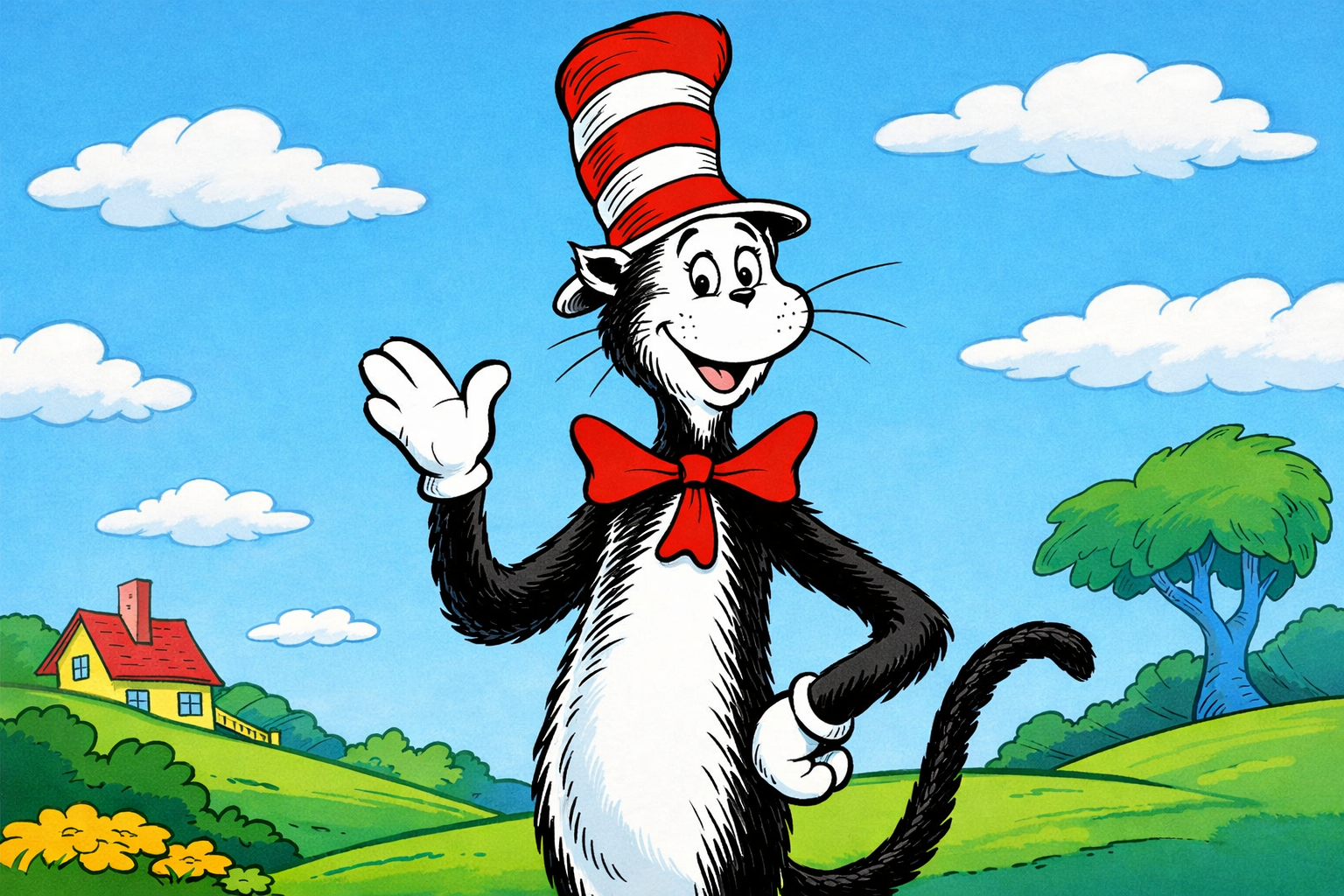
The Timeless Wisdom of Dr Seuss
Theodor Seuss Geisel was an American children's author, illustrator, animator, and cartoonist who wrote and illustrated more than 60 books under the pen name Dr Seuss.
Some of you may have read one or more of the 600 million copies sold (translated into more than 20 languages).
As a beloved children’s author, he is celebrated for his whimsical rhymes and colourful characters but his words offer profound wisdom, delivered in a light-hearted manner, for those with a willing ear.
Quotes like “Today you are You, that is truer than true. There is no one alive who is Youer than You.” still bring a smile to my face.
As 2025 is closing and we look forward to a challenging and prosperous 2026, let’s explore some of Dr Seuss’s most insightful quotes, reflecting on their meanings and relevance to adulthood.

Surrounded By Idiots
Most of us walk through life assuming that people make choices rationally.
After all, isn’t that what separates humans from other animals? We weigh costs against benefits, plan for the future, and act in our best interest.
At least, that’s the theory.
In practice, humans are anything but perfectly rational. We procrastinate, give in to cravings, act on impulse, and care about things that don’t fit neatly into spreadsheets.
Much of the world (our institutions, workplaces, and even public policies) has been designed as if people are robots. But we are not.
We’re all human, and being human means making mistakes.
The good news is that behavioural economics and behavioural science can help us better understand ourselves and others.

Simple Life Lessons
Sometimes life has a way of teaching us important lessons through various trials and tribulations.
And sometimes, those trials and tribulations can feel like a hard slap in the face, a wake-up call urging us to refocus and recalibrate.
The wisdom shared in this list of 25 life lessons provides just that; a wake-up call to help you navigate life with more purpose and insight.
They are not born from deep research into the psychology of human behaviour. Just simple truths tried and tested over time.
Let’s dive into each of these and explore why they matter.

The Math of Life and Death
When you think of mathematics, what often springs to mind is geometry class, algebra with variables, or maybe the frustration of a long exam.
Rarely do we equate math with matters of life and death. But that’s where Kit Yates takes us in his book “The Math of Life and Death”.
He argues that the hidden mathematics behind everyday decisions, from health care to legal cases to financial planning, can truly determine how we live and how we die.
Yates demonstrates through real-world stories that what may appear as cold numbers often have human consequences.
He says the design of the title is deliberately strong, stating, “Yes, sometimes maths can be a matter of life and death.”
When you see a newspaper headline about a “20 % increase in risk,” or you hear the phrase “your chance of X has doubled,” you shouldn’t just shrug and carry on.
These numbers matter, and misunderstanding them can cost lives.

The New Gold
Walk into any boardroom in 2025 and you will hear three familiar words pop up again and again: data, energy and water.
These three simple words are likely the new gold of the 21st century because they share four features with historical gold rushes:
1. They are scarce in the places that need them most.
2. They are unevenly distributed.
3. They carry outsized geopolitical leverage, and
4. They can compound value across the rest of the economy.
So, suppose you are planning a strategy for a country, a company, or your own career. In that case, it is essential to understand why these resources have moved to the centre of power, who stands to win, who may lose, how quickly the shift is unfolding, and where the proverbial new seams will be found.

Oxygen
If you’re a leader, understand this: Recognition isn’t a perk. It’s oxygen. Without it, people suffocate.
If you have seen a capable person slowly disengage at work, you may know how quietly suffocation happens. They start showing up a little later, speaking less, and volunteering less often. It's nothing dramatic; just the creeping absence of air.
The uncomfortable truth for leaders is that recognition is not a perk for good times; it is the oxygen people breathe at work. When it is present, you barely notice it. When it is absent, everything begins to fail.
This article unpacks why recognition matters, how to do it well, what to avoid, and which real-world examples show the idea in action.

Our Tendency to Misjudge
Humans pride themselves on being rational creatures, capable of weighing evidence and making sound decisions. Yet, as history and experience keep reminding us, we are prone to repeated errors of judgment.
No one explained this better than Charlie Munger, vice-chairman of Berkshire Hathaway and long-time business partner of Warren Buffett.
Munger argued that most mistakes in judgment come not from ignorance of facts but from psychological tendencies that subtly distort how we interpret the world.
He identified 25 psychological biases and tendencies, compiled in his book "Poor Charlie's Almanack," to understand and avoid common patterns of human misjudgment.
In his famous talk, “The Psychology of Human Misjudgment”, he explains several of these “misjudgments.”
By understanding them, we can become more aware of our blind spots, improve our decisions, and avoid traps that have cost individuals and organisations dearly.

This Is Me (Pty) Ltd
There is a simple equation for individual success. Build something genuinely good, then make sure the right people know it exists.
For professionals, the “product” is their capability and character. The “marketing” is their personal brand, the way others understand what they do, the results they deliver, and the values they stand for.
Tom Peters captured this many years ago with a rallying cry that still rings true: “You are the chief marketer for the brand called You”.
A strong personal brand is not a vanity project. It is a practical system for earning trust, creating opportunity, and compounding the value of your work over time.

You’re Not Just Light … You’re Shadows Too
At some point in our lives, we’ve all been told to “focus on the positive,” “be the light,” or “choose kindness.”
And while those sentiments carry value, they can sometimes paint an incomplete picture of what it means to be fully human.
The truth is, you are not just light. You are shadows, too.
Embracing both sides, the light and the dark, is necessary for self-understanding and authentic connection with others.
So, let’s explore some practical examples, dig deeper into this idea, and use the lens of personality (in this case, the somewhat simplistic but well-known Myers-Briggs Type Indicator (MBTI)) to appreciate the full spectrum of who we are as humans.