

My aim is to inspire people around the world one blog post at a time.
This is the place to nourish your mind, heart, body and soul.
-
It all begins with an idea. Maybe you want to launch your own business. Maybe you want to escape the rat race and find peace in simple living. Maybe you want to improve your health. Whatever your dream is, it is valid!
-
Dreams without action are just dreams. But taking action doesn’t necessarily mean quitting your job and burning the ocean. Small steps matter. It is the ability to plug away consistently at something over time that is the key. Small steps add up. You’ll get there!
-
If you keep building slowly and consistently with passion each day, adding value that matters to you, then the growth will take care of itself. The keys to achieving success are patience and avoiding complacency.
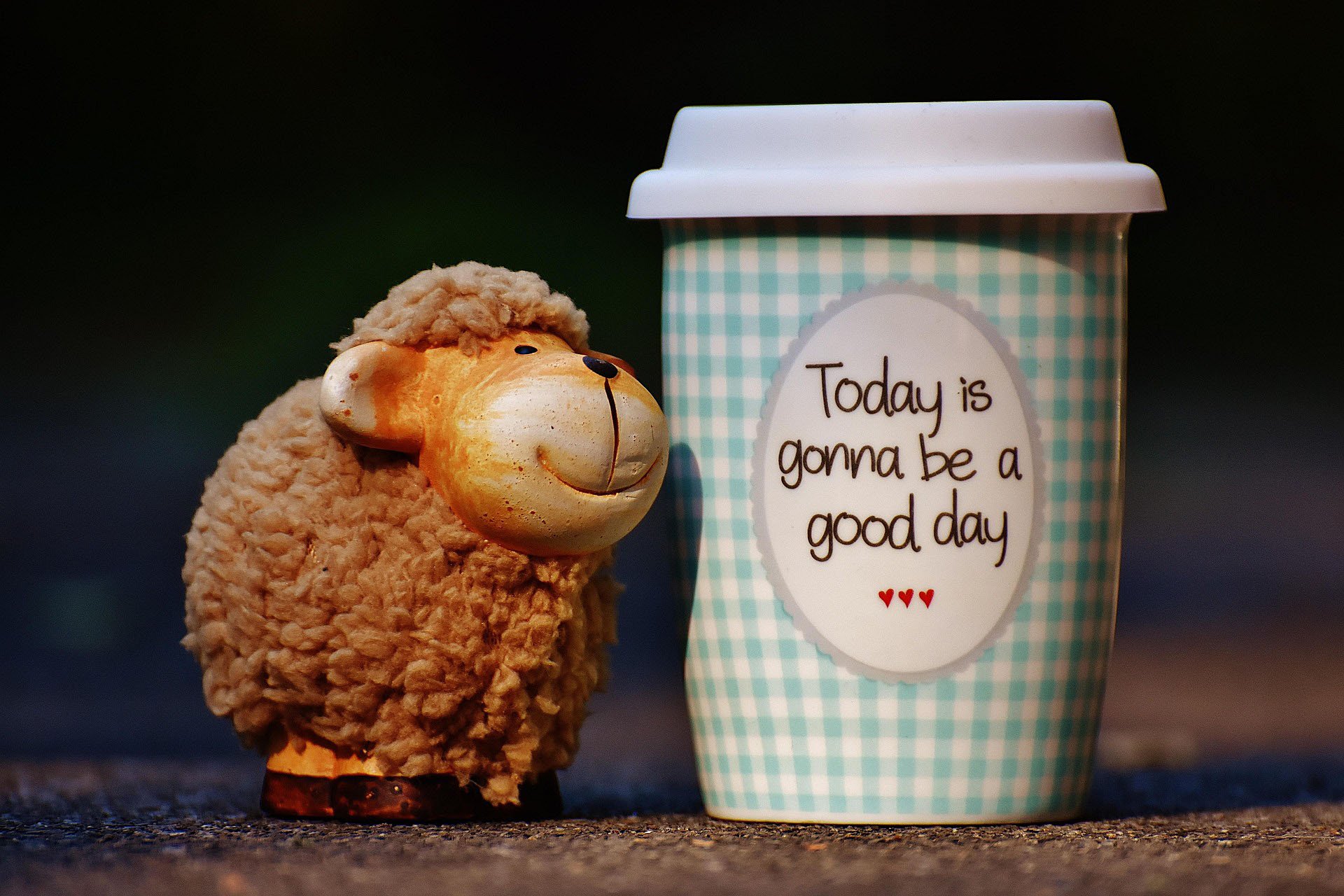
These Are The Good Days
Imagine that tomorrow morning you receive some genuinely wonderful news.
You get the promotion you have been chasing for three years. Your investment finally pays off. The offer on your dream house is accepted. Or perhaps the person you have been hoping to hear from sends the message you wanted to hear. You would probably feel happier.
Now imagine yourself six months later.
You still have the job. You still live in the house. The money is still in the bank. The relationship still exists. Yet there is a fair chance that you no longer wake up every morning thinking how extraordinarily fortunate you are. Life has become normal again.
That simple observation sits behind one of the most interesting ideas in the psychology of happiness: hedonic adaptation. We respond emotionally to changes in our lives, sometimes very strongly, but over time we often become accustomed to them. Our happiness then drifts back towards something resembling its previous level.
A recent Instagram reel by Dr Anna Fry neatly describes the idea: happiness can often be changed in the short term, but changing it over the long term is much more difficult because we tend to return to a baseline.
Broadly speaking, the science agrees. The interesting part lies in what happens when we ask a second question. “If we keep returning to a baseline, can we ever become sustainably happier”?
The answer appears to be yes. But probably not in the way we usually try to do it.

The Journey is the Destination
In an age characterised by the relentless pursuit of goals, many individuals find themselves trapped in a cycle of ambition and achievement that often leads to discontent.
The Russian writer Fyodor Dostoyevsky embodied this struggle. He was a tortured soul who questioned everything, including his faith.
As Arthur C. Brooks notes Dostoyevsky’s “deep uneasiness with life led him to create a blueprint for living centred not on comfort and enjoyment, but on meaning.”
The lesson is that life's journey, with its ups and downs, is as significant as the goals we chase. Notably, while undoubtedly important, the pursuit of goals can blind us to the richness of life’s moments.

I Think Therefore I Am
Descartes once famously declared, "Cogito, ergo sum," or in English, "I think, therefore I am."
This simple yet profound statement has echoed through the corridors of philosophy for centuries, sparking debates, contemplations, and reflections on the essence of existence.
So, what does it mean, and why does it matter?
First and foremost, "I think" implies the act of conscious thought. It encompasses all forms of mental activity, from pondering the mysteries of the universe to deciding what to have for breakfast.
It is the quintessence of our consciousness, the very thing that makes us aware of ourselves and the world around us.
But why is thinking so significant?
Well, it's not just about pondering the meaning of life or contemplating abstract concepts. Thinking is the very foundation of our existence. It's what separates us from mere automatons or rocks.
It's the spark that ignites our curiosity, drives our creativity, and propels us forward on the journey of self-discovery.
We can illustrate this with a few examples …

Mindset Matters … Way More Than You Think
In 1945, the world record for running one mile (1600m) was 4 minutes and 1.3 seconds, set by Gunder Hagg of Sweden.
And that's where the record got stuck for the next nine years, seemingly unbreakable to many.
Finally, on 6 May 1954, in Oxford, England, Roger Bannister became the first person to break the 4-minute barrier in a time of 3 minutes and 59.4 seconds.
But this isn't the exciting part.
What is fascinating is that soon after Bannister's historic feat, other runners were inspired to follow suit, and they did so quickly.
How was this possible?

Lost in the Crowd
In a world where social media platforms like YouTube, TikTok, and Instagram offer the tantalizing promise of instant fame and fortune, it's easy to get swept up in the allure of being rich and famous with just the click of a button.
But the reality is far more complex, akin to showing up once for a football or cricket game and expecting to be spotted by the television cameras amidst a sea of thousands of supporters.
Imagine you have dreams of becoming the next big thing on YouTube, with millions of adoring fans hanging on your every word.

The Art of Kintsugi
In a world obsessed with perfection and flawlessness, a Japanese art form celebrates imperfection and embraces the beauty of brokenness.
Kintsugi, or the "golden joinery," is more than just a technique for repairing broken pottery by joining the fractured parts with an Urushi lacquer mixed with powdered gold, silver, or platinum.
Imagine a delicate ceramic bowl, cherished for its elegance and craftsmanship, accidentally dropped and shattered into countless pieces.
In Western culture, the instinct might be to discard the broken pieces as worthless or attempt a meticulous repair job to conceal the damage.
But in Japan, the approach is different, one that honours the history and journey of the object.