

My aim is to inspire people around the world one blog post at a time.
This is the place to nourish your mind, heart, body and soul.
-
It all begins with an idea. Maybe you want to launch your own business. Maybe you want to escape the rat race and find peace in simple living. Maybe you want to improve your health. Whatever your dream is, it is valid!
-
Dreams without action are just dreams. But taking action doesn’t necessarily mean quitting your job and burning the ocean. Small steps matter. It is the ability to plug away consistently at something over time that is the key. Small steps add up. You’ll get there!
-
If you keep building slowly and consistently with passion each day, adding value that matters to you, then the growth will take care of itself. The keys to achieving success are patience and avoiding complacency.

Think Like a Genius
In a world of complexity, how do some individuals consistently make brilliant decisions, solve challenging problems, and uncover insights others miss?
In this chaotic reality, some people seem to rise above it all. They see patterns others miss, solve problems elegantly, and make decisions that seem almost prescient.
Are they geniuses? Maybe.
But more often, they are people who have mastered the use of mental models.
Mental models are the tools of the mind, allowing us to “see the forest from the trees.” They help us zoom out, connect disparate ideas, and avoid cognitive traps.
They’re not rigid formulas but tools to help you simplify complexity, avoid common cognitive pitfalls, and think clearly. By learning and applying them, you can approach life’s challenges with the same clarity as the great thinkers of our time.

The Digital Dopamine Trap
In the 21st century, digital technology has become integral to everyday life.
From smartphones to social media and gaming, children today grow up in an environment where access to digital devices is nearly ubiquitous.
Technology undoubtedly offers numerous benefits, such as instant access to information, enhanced communication, and learning tools, but it also has significant downsides.
One of the most concerning is the extent to which children are being left to their own devices, both figuratively and literally.
With significant access to social media, video games, and online entertainment, many children are increasingly addicted to these digital experiences.
This “dopamine cocaine” effect, driven by the same neurochemical that fuels addiction, is not only impairing children’s ability to self-regulate but is also preventing them from developing the critical life skills necessary to succeed in the real world.

The Sun Doesn’t Rise Because The Rooster Crows
Humans are natural storytellers, and the ability to draw connections is at the heart of storytelling.
When we see two events happen in sequence, we instinctively create a narrative to link them. This capacity has helped us survive, adapt, and innovate.
But as helpful as this instinct is, it can also mislead us.
Not everything is connected, and failing to recognise this has led to erroneous decisions in both personal and business life.
A classic illustration of this flawed reasoning comes from an old tale: the rooster crows and the sun rises. It doesn’t take much to see how the rooster might start believing its crowing causes the sunrise.
Of course, the sun will rise whether or not the rooster crows. Yet humans, despite our supposed superior intelligence, often fall prey to the same kind of misjudgment.
Let’s explore why we do this, how it manifests in the real world, and how we can avoid these pitfalls.
The Power of Kaizen
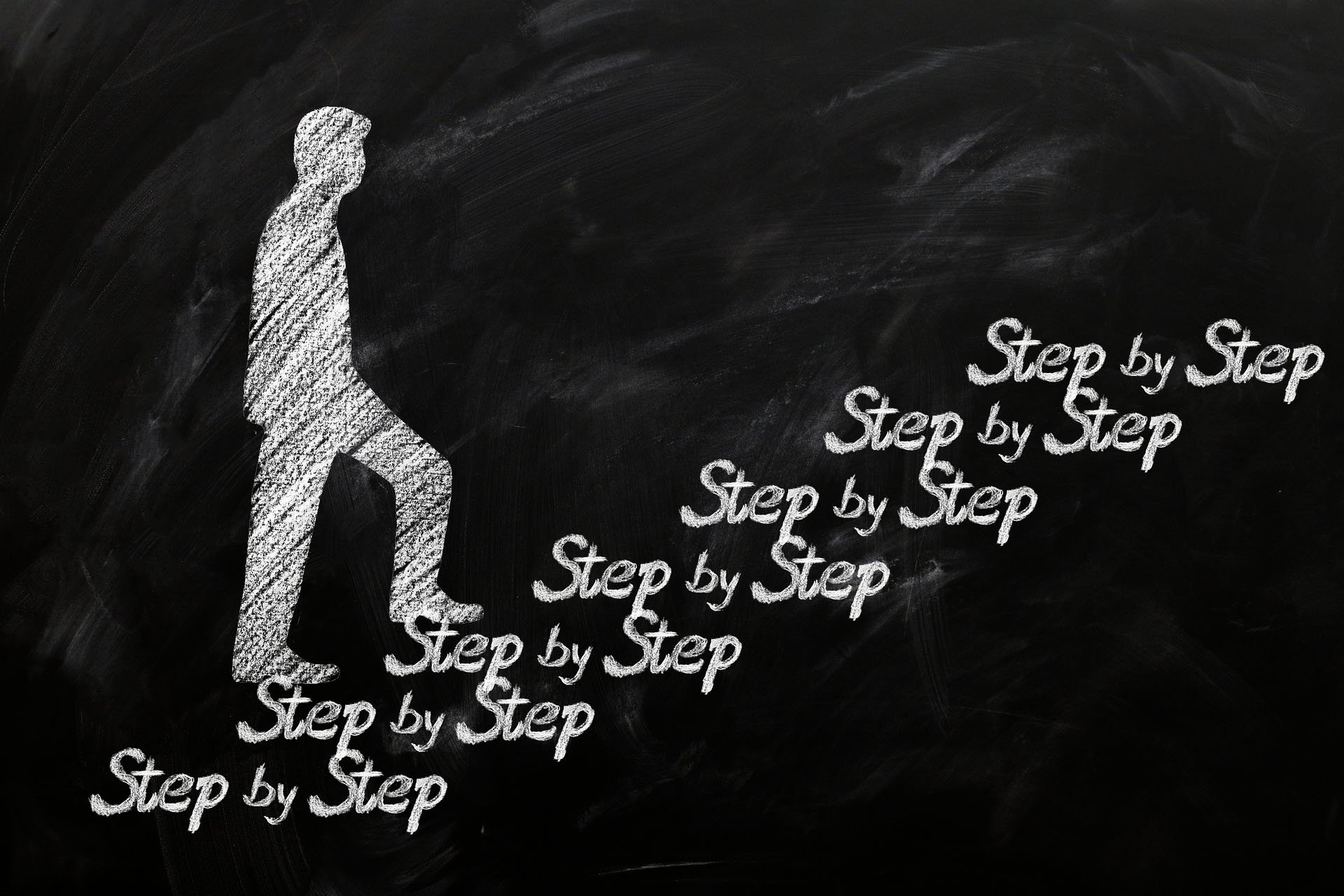
In a world obsessed with quick fixes and overnight success, the term kaizen is a refreshing reminder that lasting change is often the product of small, deliberate steps.
Rooted in Japanese culture, kaizen translates to “change for the better.”
It emphasises the power of incremental improvements, which resonates across personal growth and organisational success.
But what exactly does kaizen entail, and how can it transform our lives and businesses?
Let’s explore the principles of this fascinating philosophy and see how we can apply them in meaningful ways.

Are You Predictably Irrational?
If you randomly ask several strangers how rational they think they are, what do you think their response would be?
What would your response be?
Most people believe they are reasonably rational human beings.
However, in “Predictably Irrational”, American professor and author Dan Ariely challenges the long-standing belief that humans are fundamentally rational beings who make decisions in their best interest.
Instead, through a series of fascinating experiments and real-world examples, he reveals that we’re anything but rational.
As he shows, our decisions are shaped by invisible forces—cognitive biases and emotions—that consistently lead us astray.
What makes these irrational behaviours even more intriguing is their predictability. We tend to make the same errors repeatedly under similar circumstances.
The Body Keeps Score
When we think about trauma, it’s easy to assume it lives primarily in the mind. After all, isn’t trauma just a psychological experience?
Well, not quite.
According to renowned experts Bessel van der Kolk and Gabor Maté, trauma also embeds itself deeply into the body, affecting our physical health, behaviours, and even the way we perceive the world.
Their research offers profound insights into how unresolved trauma can wreak havoc on our lives and, importantly, how we can begin to heal.
So, let’s explore the key ideas presented in “The Body Keeps the Score” by Dutch psychiatrist Bessel van der Kolk and “The Myth of Normal and When the Body Says No” by Canadian Physician Gabor Maté.
We’ll also look at strategies for reducing the impact of trauma on physical wellness.

The Magic of Momentum
Momentum is a simple concept, but it is so powerful it may seem magical. At its core, momentum is the force that propels us forward, whether in life or business.
But, understanding momentum goes far beyond Newton’s laws or catchy motivational quotes. It’s about leveraging small wins, building sustainable energy, and aligning your actions with strategic thinking.
To truly grasp the power of momentum, we need to examine its impact in multiple areas, such as science, strategy, and real-life success stories.
So, let’s begin by exploring the mental models that fuel momentum, see how initiative often dictates outcomes, and analyse how momentum has propelled some of the most iconic figures and organisations in history.

The Clock Is Ticking
Have you ever wondered how much time you have for yourself in a day and, more importantly, life?
With the hustle and bustle of modern life, it can feel like there's hardly any time left for what truly matters.
The key is to therefore be intentional with your time.
It's easy to get caught up in the daily grind and let days, months, or even years slip by without really living. By being mindful of how you spend your time and consciously prioritising what's important to you, you can make the most of your time.
Life is short, and time is precious.

Carpe Diem - Seize The Day
As 2024 takes her last few breaths, many of you may be contemplating a few "New Year's Resolutions".
Resolutions you hope will bring about the change you desire in your life.
In doing so, you may want to consider the simple concept of Carpe Diem, a Latin phrase meaning "seize the day".
It’s a philosophy that encourages living in the present and making the most out of every moment.
This concept isn’t new and has echoed through the ages, from the poetry of Horace, who originally penned the phrase, to the impactful 1989 film "Dead Poets Society."
The film, directed by Peter Weir and starring Robin Williams as the unconventional English teacher John Keating, brings Carpe Diem to life in a way that resonates deeply with audiences.
Today, as we navigate the complexities of modern life, the lessons from this timeless film can guide us in embracing the philosophy of Carpe Diem in practical and meaningful ways.

Betrayed By Body Language
You have undoubtedly heard about body language, a fascinating world where words are not the only things doing the talking. From the tilt of your head to the sway of your hips, your body constantly sends signals that convey meaning and emotion.
Have you ever found yourself in a situation where someone's words seemed to say one thing, but their body language told a completely different story?
Let's take a quick look at some of the subtle cues and signals that betray our true thoughts and feelings, even when we try to mask them with words.

Twenty Life Changing Paradoxes
Life is full of mysteries and contradictions that can leave us scratching our heads.
Yet, these paradoxes often carry deep wisdom, challenging our perceptions and offering profound insights.
Paradoxes challenge conventional wisdom and offer simple but profound insights into what it means to live a meaningful and fulfilling life.
Let’s look at some of these and embrace their contradictions so that we can navigate the complexities of life with greater ease and understanding.

On the Edge of Chaos
We live in a world where change is the only constant. Each day seems to bring a new development, a fresh crisis, or an unexpected breakthrough, often leaving us teetering on the edge of chaos.
This is not hyperbole but an increasingly accurate reflection of our global reality. Climate change, political instability, economic turbulence, and technological disruption are converging to create a unique and highly precarious moment for humanity.
It feels as though we are standing at a crossroads that, depending on our decisions today, could lead to vastly different futures.
There are arguably many actors contributing to the colourful global stage we inhabit. But in this essay, we’ll explore six critical global events driving us toward this precipice.
Each represents a source of both danger and opportunity and together, they illustrate how humankind is inching toward an uncertain future.

The Talent Myth
“Talent hits a target no one else can hit; Genius hits a target no one else can see.” – Arthur Schopenhauer
When discussing success, we often imagine an inherent genius at work, a unique talent that propels someone to the top. From child prodigies to natural athletes, it’s easy to fall for the narrative that talent is the cornerstone of achievement.
Whilst talent is undoubtedly an asset and being a genius undeniably provides a unique competitive advantage, they are not always the driving force behind success.
In fact, in today’s complex and fast-paced world, other qualities like self-discipline, perseverance, situational awareness, and emotional intelligence may play a much more critical role in determining who thrives and who doesn’t.
So, let’s take a moment to reframe the conversation about success and recognise the often underappreciated elements that truly propel people forward.

Talking to Strangers
In his book “Talking to Strangers,” Malcolm Gladwell takes us on a fascinating journey into how humans interact with people they don’t know and the misunderstandings that often arise from these interactions.
We might think we’re good at reading people, but Gladwell argues that the opposite is true.
Through a series of thought-provoking examples, ranging from high-profile scandals to everyday encounters, he lays bare the hidden dynamics that govern our interactions with strangers.
This is useful because in today’s world we regularly interact with people from different cultures, backgrounds, both online and in person.

Sometimes You Are The Problem
Employees quit their jobs for many reasons, but the root of the problem is often found within a company’s culture, leadership, and management practices.
When employees leave, it’s easy for employers to point fingers or blame external factors such as market trends or the employees themselves.
But the uncomfortable truth is that, in many cases, the company itself is the problem.
Here are 12 hidden reasons why employees leave a company.

When the Bubble Bursts
Are we busy creating a world where children struggle to develop essential life skills?
In today’s fast-paced and technology-driven society, we often find ourselves caught up in the whirlwind of parenting trends, educational reforms, and social media's pervasive influence.
While our intentions are often noble—ensuring our children are happy, safe, and successful—the reality is that we may be inadvertently stunting their growth.
Children today face many challenges that hinder their development of essential social and life skills.
From over-parenting to the distractions of digital technology, the environment we’ve created raises significant questions about our children’s preparedness for adulthood.
Let us take a closer look at a few.

So … You Want To Be A Leader?
Popular culture often romanticises leadership as a noble pursuit that comes with prestige, accolades, and widespread admiration.
However, the reality of leadership is far more complex and fraught with challenges.
To become a successful leader, one must confront uncomfortable truths.
These truths, though daunting, are essential for anyone aspiring to lead effectively.
Let’s explore these hard truths, demonstrating their significance through the experiences of well-known leaders and public figures.

What If Tomorrow Doesn’t Come?
We all live our lives assuming that tomorrow is a given; that we will always have more time. Time to pursue our dreams, patch up relationships, and do the things we’ve been putting off.
But what if tomorrow doesn’t come?
This question can make us feel uneasy or even scared, but it can also inspire us to live more fully today.
This question became painfully real for Holly Butcher, a vibrant 26-year-old from Australia who was diagnosed with a rare form of terminal cancer. Knowing that her time on Earth was limited, Holly penned a letter that has resonated with millions across the globe.
Her letter isn’t just about death. It’s about life—how to truly live in the face of the inevitable.

Rules Worth Breaking
Rules are the bedrock of societal functioning.
They create order, predictability, and a framework within which we can operate harmoniously.
From the laws that govern nations to the rules we set in our homes, these guidelines help us navigate life more smoothly and safely. Rules ensure fairness, protect rights, and maintain a level of decorum that makes communal living possible.
Most rules are designed with good intentions; generally speaking, following them is advisable.
They often stem from collective wisdom and experience, providing a tested path to achieving specific outcomes. Rules like "don't steal" or "pay your taxes" are fundamental to the functioning of a just society.
However, not all rules are sacrosanct.
Here are some rules worth breaking, even if it goes against what we've been taught …

Your Behaviour Isn’t As Consistent As You Think
Have you ever found yourself behaving in ways that surprise even you?
One moment, you're patient and understanding; the next, you're snapping at a loved one over a minor inconvenience.
This human inconsistency is not just a quirk but a fundamental aspect of our nature.
A renowned author and thinker, Malcolm Gladwell, stumbled upon a compelling explanation for this in the book "The Person and the Situation" by Richard Nisbett and Lee Ross.
The book argues that our actions are profoundly influenced by the contexts we find ourselves in, challenging the notion that we operate with a fixed set of moral and intellectual guidelines.
Instead, at the heart of our inconsistent behaviour lies a complex interplay between our internal traits and our external circumstances.
This dual influence can make us behave in seemingly contradictory ways. We are not always as consistent as we would like to believe.
Let's look at a few explanations for this.